ServicesBasement Cleanouts
Basement Cleanouts in Duluth, GA
We empty basements of what piles up below the stairs: old furniture, boxed paperwork, broken exercise gear, spare freezers and damp cardboard. Our crew carries everything up and out, sweeps the floor, and gives you a written price before any lifting starts.
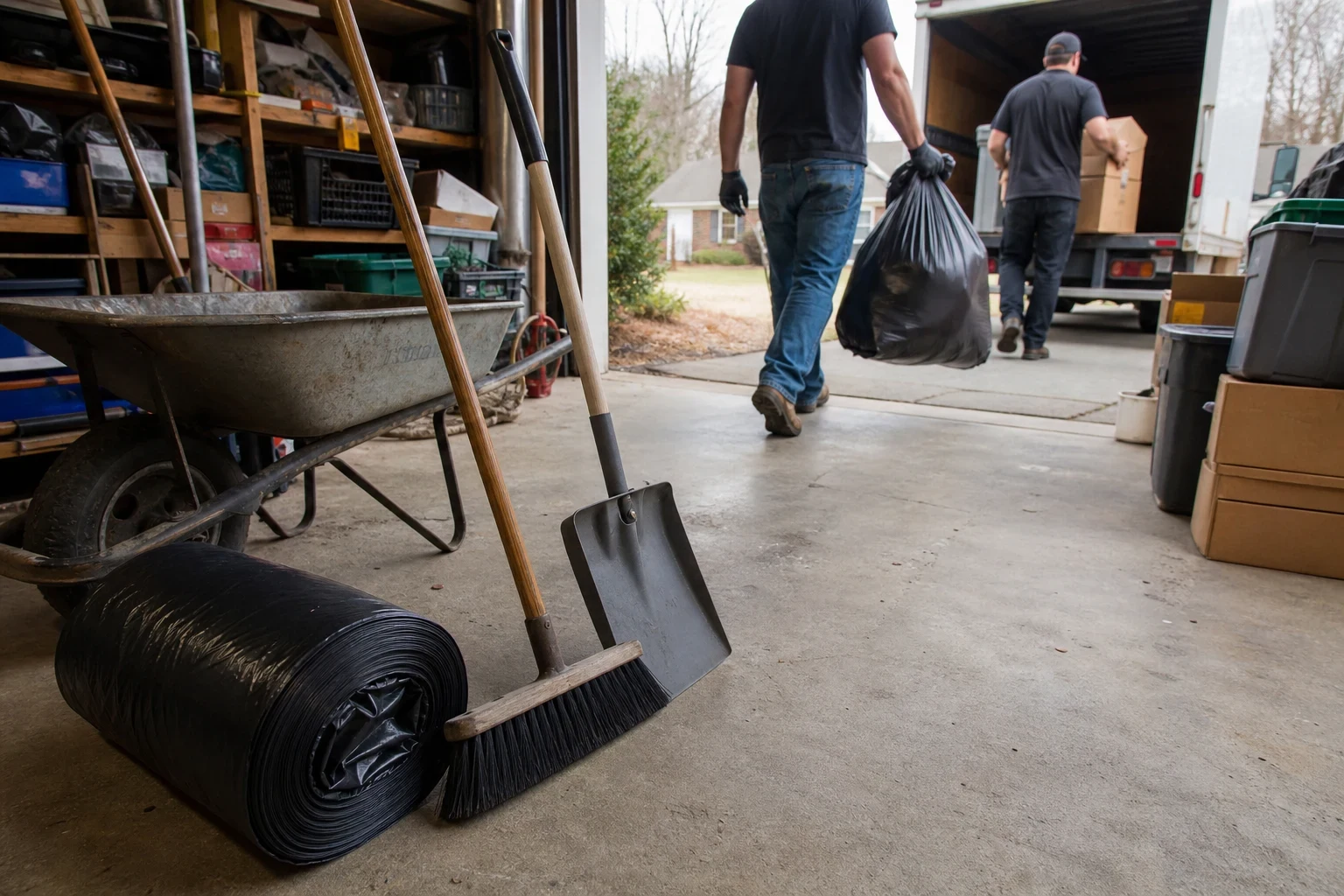
When a basement cleanout makes sense
A basement fills up slowly. Boxes go down on move-in day, furniture goes down when a room gets updated, and little comes back up because the stairs make it a chore. After a few years the space is storage you can't reach, and the stacks hide problems like a weeping block wall or a slow drip at the water heater.
Moisture is the main reason to clear it sooner. Cardboard and upholstered furniture absorb humidity, and long Georgia summers keep below-grade air damp for months. Paper and fabric that stay damp feed mildew, which then moves onto framing and drywall. Hauling that material out now costs less than mold remediation or replacing finished walls later.
We do the carrying, the sorting into donate, recycle and dispose, and the final sweep. If you only need a single sofa or recliner gone, our furniture removal service is the better fit. A basement cleanout is for the whole room or most of it.
What a basement cleanout includes
- Carry-out by stairs or walk-out door
- We take items up the interior stairs or out a walk-out door, whichever path is safer for your walls and floors. Banisters and door frames get padded, and runners go down on finished flooring along the route.
- Furniture, mattresses and electronics
- Sectionals, sleeper sofas, futons, desks, treadmills, old TVs and monitors. Pieces that went down before a stairwell was finished sometimes won't come back up whole, so we remove legs, arms or hardware to get them out without gouging drywall.
- Leftover appliances
- Second refrigerators, chest freezers, dehumidifiers and old washers or dryers that are already disconnected. Units that hold refrigerant go to recyclers that recover it before the metal is scrapped.
- Water-damaged boxes and fabric
- Wet cardboard, mildewed area rugs, carpet remnants and ruined seasonal storage. We bag soft, damp material so it doesn't drip or shed through your home on the way out.
- Sorting for donation and scrap
- Usable furniture and household goods go to donation where accepted, metal goes to scrap, and only the remainder goes to the landfill. Anything you keep, we leave stacked where you want it.
- Sweep-out
- Once the room is empty we sweep the slab or vacuum the carpet, so you can see the floor, the walls and the base of the foundation.
Signs your basement is due for a cleanout
A musty smell that won't clear
That odor usually comes from mildew growing on paper, cardboard or fabric. A dehumidifier can't keep up while the source material stays in the room.
Blocked water heater, furnace or panel
Boxes stacked against a gas water heater or furnace are a fire risk, and they slow down any service call. Electrical panels need about three feet of clear space in front of them.
White, chalky deposits on the walls
That residue, called efflorescence, means water is moving through the masonry. You can't judge how serious it is until the wall is clear.
You plan to finish, sell or rent the space
Contractors, inspectors and buyers all need to see the slab and walls. Clearing first keeps a renovation estimate or inspection accurate.
Chewed boxes or droppings
Mice and silverfish nest in stored paper and fabric. Removing the clutter takes away their food and cover.
How we price a basement cleanout
The price comes from how much of the truck your items take up and how much effort it takes to bring them out, and you hear it before we start. Pricing is upfront with no hidden fees, so unless you add items, the quote is what you pay. Here is what changes it.
How much there is
Truck space matters most. A handful of furniture pieces costs much less than a basement packed with boxes and shelves.
The way out
A walk-out door at ground level is quickest. Tight interior stairs with a turn or landing take more labor, particularly for gun safes and sleeper sofas.
Heavy materials
Wet carpet and pad, free weights and old tube TVs are dense, weigh more and may cost more to drop off at the disposal site.
Taking things apart
Furniture built down in the basement, built-in benches and bolted steel shelves need time to break down before they will go up the stairs.
How the day runs
- 1
On-site estimate at no cost
Together we walk through the basement, look at the stairs and exits, and you get a written price based on volume and access. It costs nothing and commits you to nothing.
- 2
Decide on keepers
We settle what stays before lifting anything, whether with tape, a cleared corner or a quick list. When something is uncertain, we check with you rather than guess.
- 3
Guard the path and carry
We lay runners, pad corners and clear from the exit inward so the route stays free. Heavy items ride a hand truck or go up with two people, and nothing gets dragged over the stair treads.
- 4
Sort, sweep and walk through
Items are loaded onto our truck in your driveway, split into donation, scrap and disposal. Then we sweep and walk the space with you one last time before leaving.
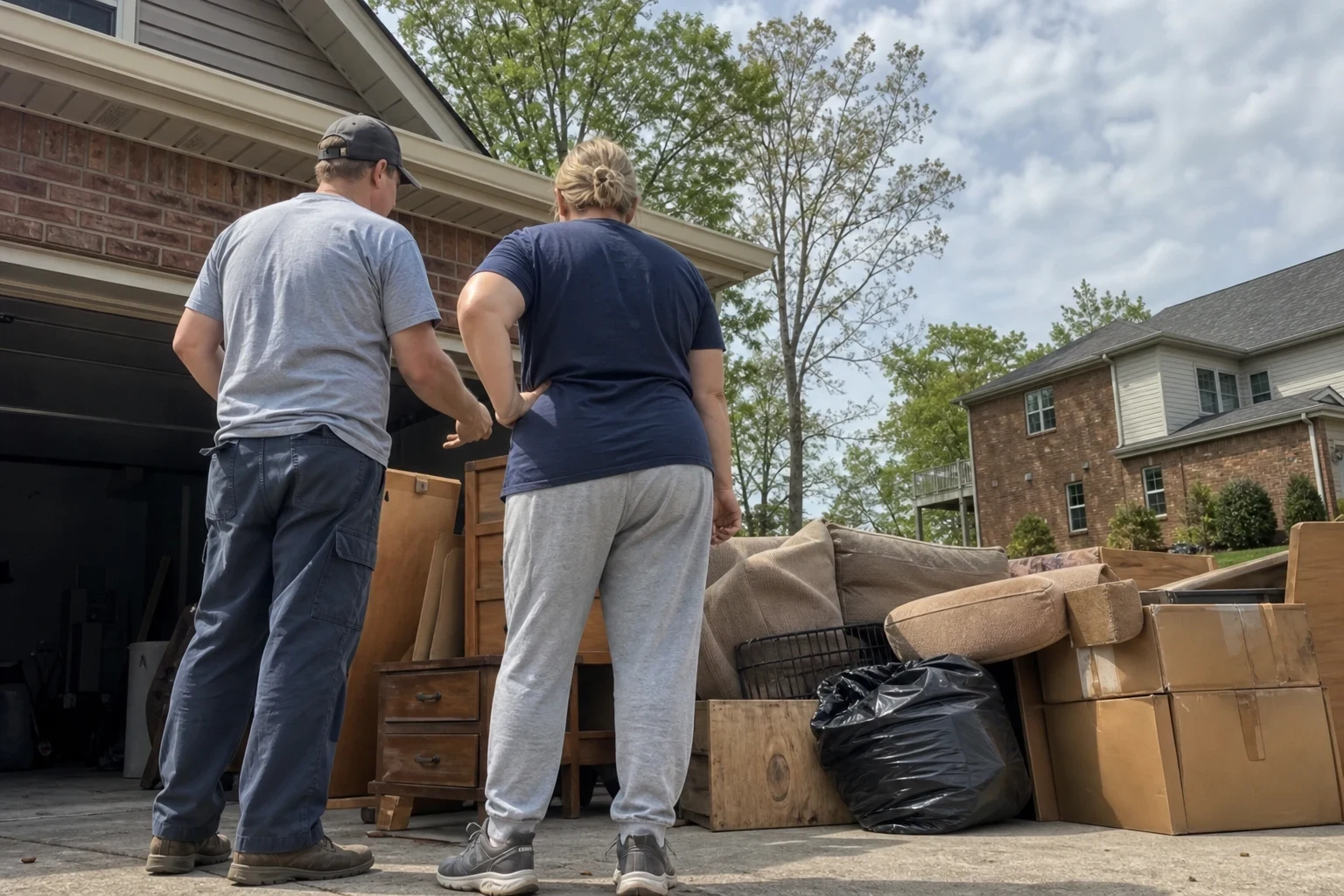
Basement cleanout questions
Will you take items that got wet or moldy?
Yes. Damp carpet, padding, cardboard and upholstered furniture are some of the most common things we haul from basements. We bag soft material before carrying it through your home. We remove the items; if mold has spread into drywall or framing, that calls for a remediation contractor.
Do I need to bring anything upstairs before you arrive?
No, leave it where it is. Carrying heavy things up basement stairs is how most backs and banisters get hurt, and our crew is set up for it. Just make sure we can get to the basement door or stairway.
Can you take an old water heater or chest freezer?
We haul appliances that are already disconnected from water, gas and power. If a water heater still needs to be drained and unhooked, have a plumber handle that first. Our appliance removal page covers what else we take.
What happens to things that still work?
Usable furniture, tools and household goods go to donation centers when they accept them, and metal goes to scrap recycling. Keeping material out of the landfill also keeps disposal costs down, which helps your price.
Is it worth clearing things I might use someday?
Weigh what each item costs to keep. A box unopened for years takes floor space, holds humidity and blocks access to your mechanicals. Clearing it once usually costs less than living with the smell and the pests, or the cleanup a hidden leak behind it would cause.
Get your basement floor back
We'll come out, look at the stairs and the load, and put a price in writing before anything moves. If the garage or a storage unit needs the same treatment, we can quote those on the same visit.