ServicesCommercial Junk Removal
Commercial Junk Removal in Duluth
We clear out offices, retail spaces, warehouses and rental units: retired cubicles, steel filing cabinets, shelving, dead electronics and the pallets stacked out back. We walk the space first, put the price in writing before any lifting starts, and plan the pickup around your business hours.
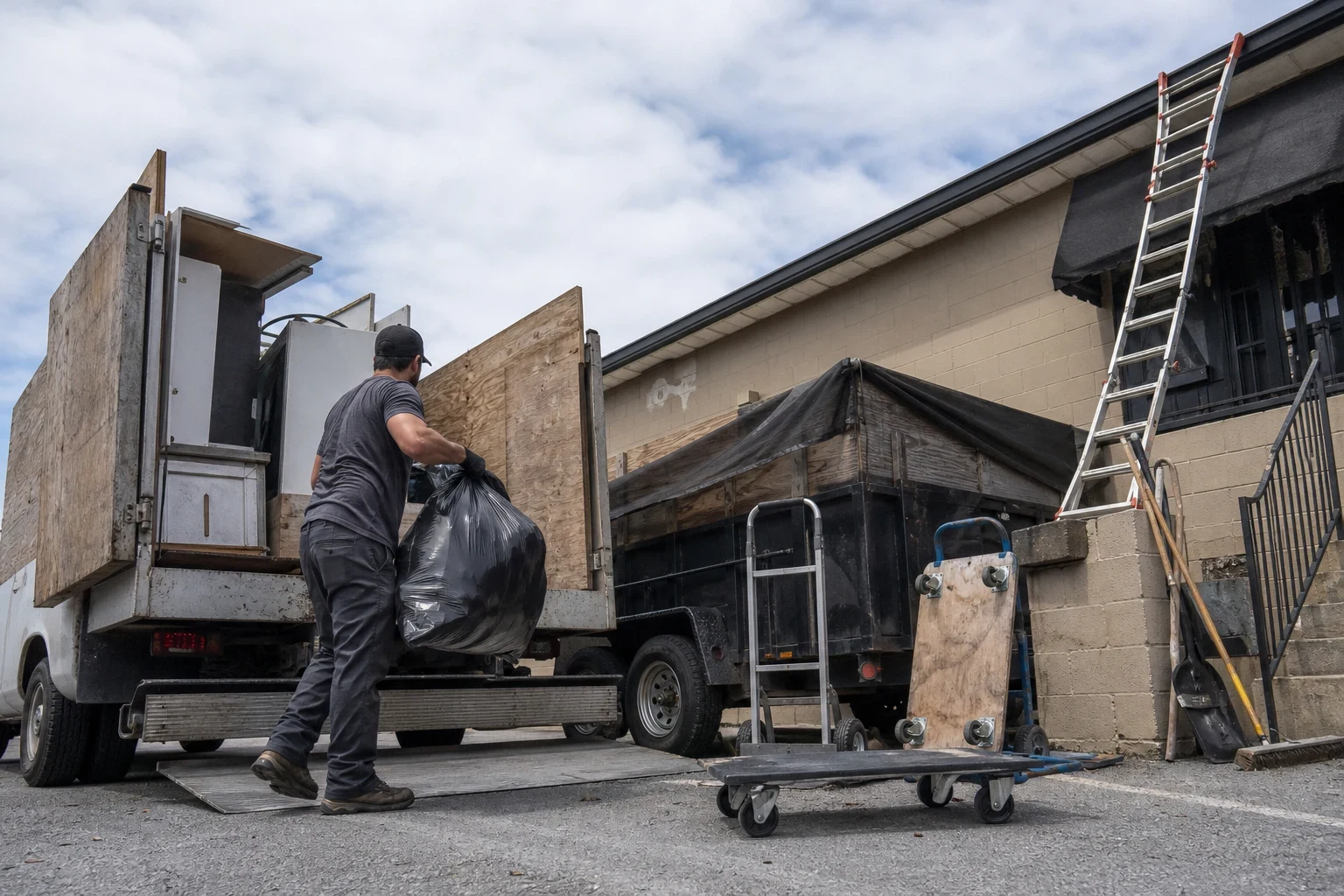
When hauling it out costs less than keeping it
Commercial junk removal is the one-time removal of furniture, fixtures, equipment and debris from a business property. Most calls come at a turning point: a lease ending, a remodel, a downsizing, or a tenant who left a unit full of belongings.
Junk in a commercial space has a running cost that is easy to miss. A back room full of broken task chairs is square footage you pay rent on every month. Dead monitors and loose cabling piled in a closet block access to the network rack or the electrical panel. We help you weigh that ongoing cost against a single haul, and we will tell you plainly when a piece is worth keeping, like a steel-frame desk that only needs a new laminate top.
We work with businesses across Duluth and nearby towns such as Norcross, Suwanee and Peachtree Corners.
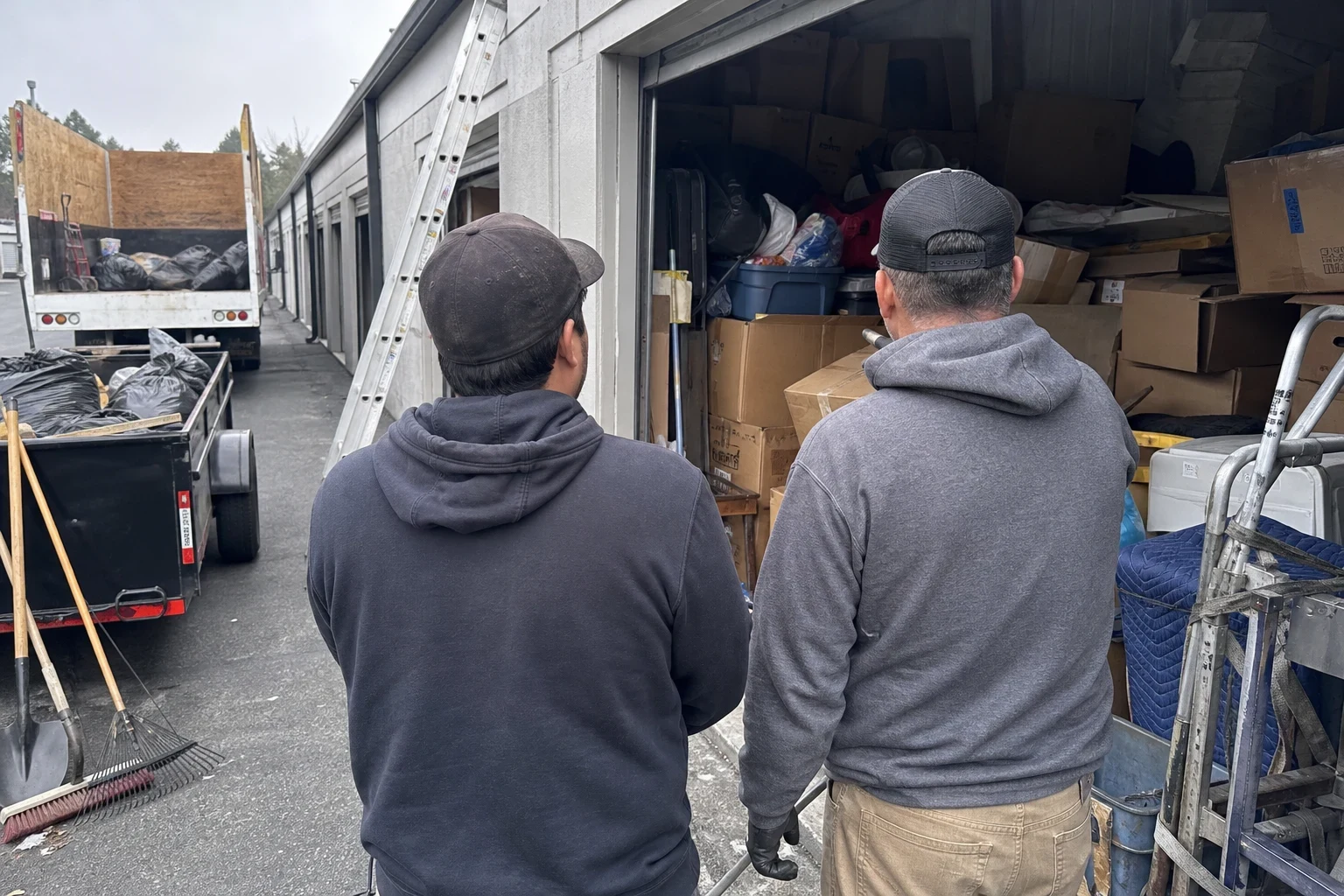
What we haul from commercial spaces
- 01
Office furniture and cubicle systems
We break down panel systems by unbolting the steel frames and separating the fabric-covered panels, so they fit through standard doors and elevators. Desks, credenzas, conference tables and chairs go out the same way, without gouging walls or door frames.
- 02
Filing cabinets and shelving
Steel lateral files, gondola shelving, wire racks and pallet racking uprights are heavy and often anchored to walls or slabs. We pull the anchors, check every drawer before it leaves, and route the metal to scrap recycling where it is accepted.
- 03
Electronics and office equipment
Monitors, desktop towers, printers, copiers and server cabinets are kept out of the general load and sorted for electronics recycling. If a machine holds client data on its hard drive, wipe or remove the drive before pickup.
- 04
Retail fixtures and displays
Slatwall panels, glass display cases, checkout counters, mannequins and sign frames. Glass cases are emptied and carried flat so the panes do not flex and crack on the way out.
- 05
Pallets, cardboard and back-of-house debris
Broken pallets, flattened boxes, shrink wrap and packing material that build up by the loading door. Clean cardboard and intact pallets can often go to recycling or reuse instead of the landfill.
Questions about Commercial Junk Removal?
Call(404) 500-0217Signs your business is ready for a cleanout
You pay rent on dead space
If a room or a corner of the warehouse holds nothing but retired equipment, that space costs you every month. One clearing visit often costs less than another year of rent on storage you do not use.
A move-out date is coming
Many commercial leases require the space returned empty and broom-clean. Furniture and fixtures left behind can be charged against your deposit, so schedule removal before the final walkthrough with the landlord.
Exits and panels are blocked
Boxes stacked in a corridor, against an exit door or in front of an electrical panel are a fire-safety problem, not just clutter. Fire inspections check for clear egress paths and working clearance at panels.
Repairs have outpaced replacement
A copier on its third service call this year, or a row of chairs with failed gas cylinders. Once the repair bills pass the cost of new units, the old ones are only holding floor space.
How a commercial pickup runs
- 1
Walkthrough and written estimate
Call us and we will set a time to see the space. We note volume, item types, floor level, elevator or loading dock access, and anything that needs separate handling. You get the price in writing, and the estimate is free with no obligation.
- 2
Scheduling around your operation
We plan the pickup for a time that keeps the crew out of your customers' and staff's way. Same-day and next-day service available when the schedule has an opening.
- 3
Protecting the path and loading
We pad door frames and cover finished floors along the carry route, take apart anything that will not fit whole, and load in sorted groups: metal, electronics, reusable furniture and general debris.
- 4
Disposal and sweep-up
Each group goes where it belongs, whether that is a scrap metal yard, an electronics recycler, donation for items that qualify, or the landfill for what is left. We sweep the cleared area before we leave.
How a commercial job gets priced
The starting point is how much truck space your items fill, and labor and disposal are added from there. Pricing is upfront with no hidden fees, so for the scope on the written estimate, that figure is what you pay. Here is what can change it.
- How much and how heavy
- Truck space drives most of the price. Heavy loads such as steel files, particleboard furniture or sign bases weighted with concrete carry more disposal weight than their size would suggest.
- Getting into the space
- A ground-floor suite with a loading dock moves quickly, while a third-floor office on a shared elevator that needs booking takes longer. A long walk from the rear of a building to the truck also adds labor.
- Breaking things down
- Cubicles, bolted racking and shelving fixed to walls need tools and time to dismantle. Pieces that can go out in one piece cost less to remove.
- Separate handling and drop-offs
- Electronics, mattresses left in a vacated unit and anything bound for its own drop-off point mean an extra stop. Those items are written on the estimate so nothing shows up later.
Commercial junk removal questions
Can you schedule the pickup so it does not disrupt our customers?
Yes. Tell us on the call when your space is quietest and how deliveries reach the building. We will set the appointment and the carry route so the crew stays out of customer areas as much as the layout allows.
What should we do with confidential paperwork?
Empty file drawers of anything with client or employee information before we arrive and handle it through your own shredding process. We open every drawer as we load, and any paper we find gets set aside for you instead of going on the truck.
What happens to furniture that is still in good shape?
Sound pieces go to donation where they qualify, which keeps them out of the landfill. Before you let them go, it is worth asking whether you will need them again. Holding onto good commercial chairs for a planned expansion can cost less than buying new ones next year, and we will say so on the walkthrough.
Does someone from our business need to be there?
Someone should be on site at the start to confirm what goes and what stays. Tagging keep items with tape or a sticky note makes that quick. Once the scope is clear, you do not need to stand over the crew.
Do you clear units for property managers and landlords?
Yes. We remove furniture, appliances and leftover belongings from vacated rental units and commercial suites so the space can be cleaned and turned over. For loose household items rather than business equipment, our junk removal and furniture removal pages cover the details.
Find out what an empty space will cost
A single call books your free on-site estimate. We tour the space together, mark what stays and what goes, and hand you a price in writing.